
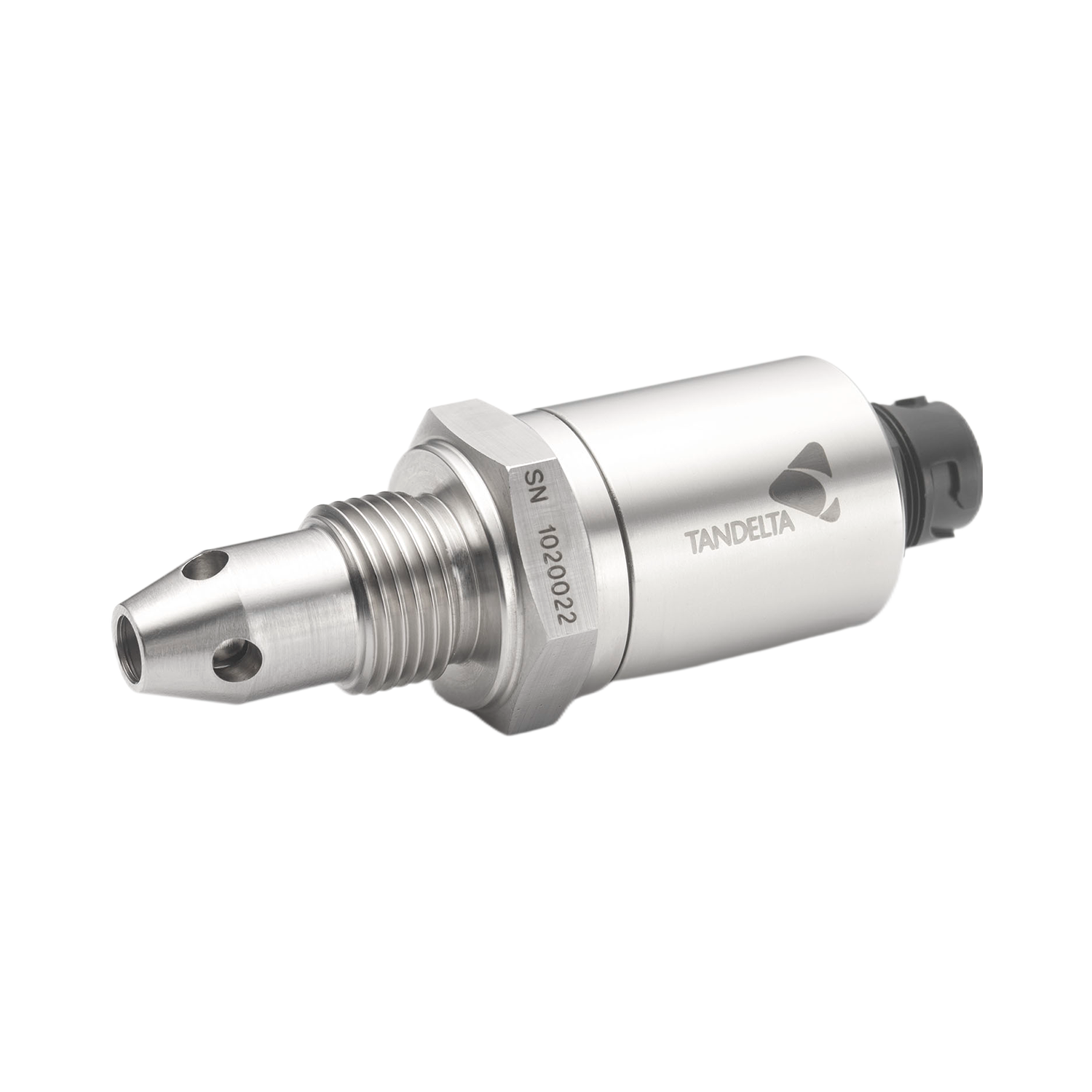
Description
Features
- Real-time oil analysis
- mineral, semi-synthetic or synthetic oil, including fuels (diesel and biodiesel)
- -40ºC (-40ºF) to +120ºC (+248ºF)
- Up to 70 bar
- IP68
- 4–20 mA
- Modbus, CANopen and J1939
The OQSx-G2 is a state-of-the-art sensor for real-time oil condition analysis. The sensor features intelligent maintenance optimisation analytics suitable for all industrial and commercial applications. The OQSx-G2 provides accurate and reliable real-time information on oil condition, delivering significant operational benefits: The OQSx-G2 is the perfect solution for companies seeking to optimise predictive maintenance, reduce downtime and achieve better energy efficiency and cost savings. Real-time analysis The TanDelta OQSx-G2 provides continuous, real-time oil condition analysis with a sensitivity of 0.01 per cent. The sensor accurately detects and reports changes caused by oil degradation, contamination or equipment wear. Reliable accuracy TanDelta’s patented molecular-level analysis technology detects even the smallest changes, down to 100 ppm. This enables reliable monitoring of oil condition and wear, as well as early detection of equipment failures before serious damage occurs. Suitable for all oils and equipment The OQSx-G2 can be installed on any piece of equipment or system, in all industrial and commercial environments. Compatible with all oil types – both mineral and synthetic oils. Significant reduction in maintenance costs The sensor enables maintenance based on the actual condition of the oil, rather than simply on fixed intervals. This allows you to predict and schedule maintenance accurately, safely extend service intervals and reduce maintenance costs by up to 30 per cent a year. Fewer downtimes – higher output Latent equipment faults cause subtle changes in the oil’s composition. TanDelta OQSx-G2 detects these at an early stage and issues an alert before the fault leads to downtime, excessive wear or damage. Supports environmental and ESG targets Safely optimise oil usage and reduce consumption by up to 30% per year. Fewer oil changes and spare parts mean less waste, lower emissions and a longer equipment lifespan – a step towards more sustainable maintenance.